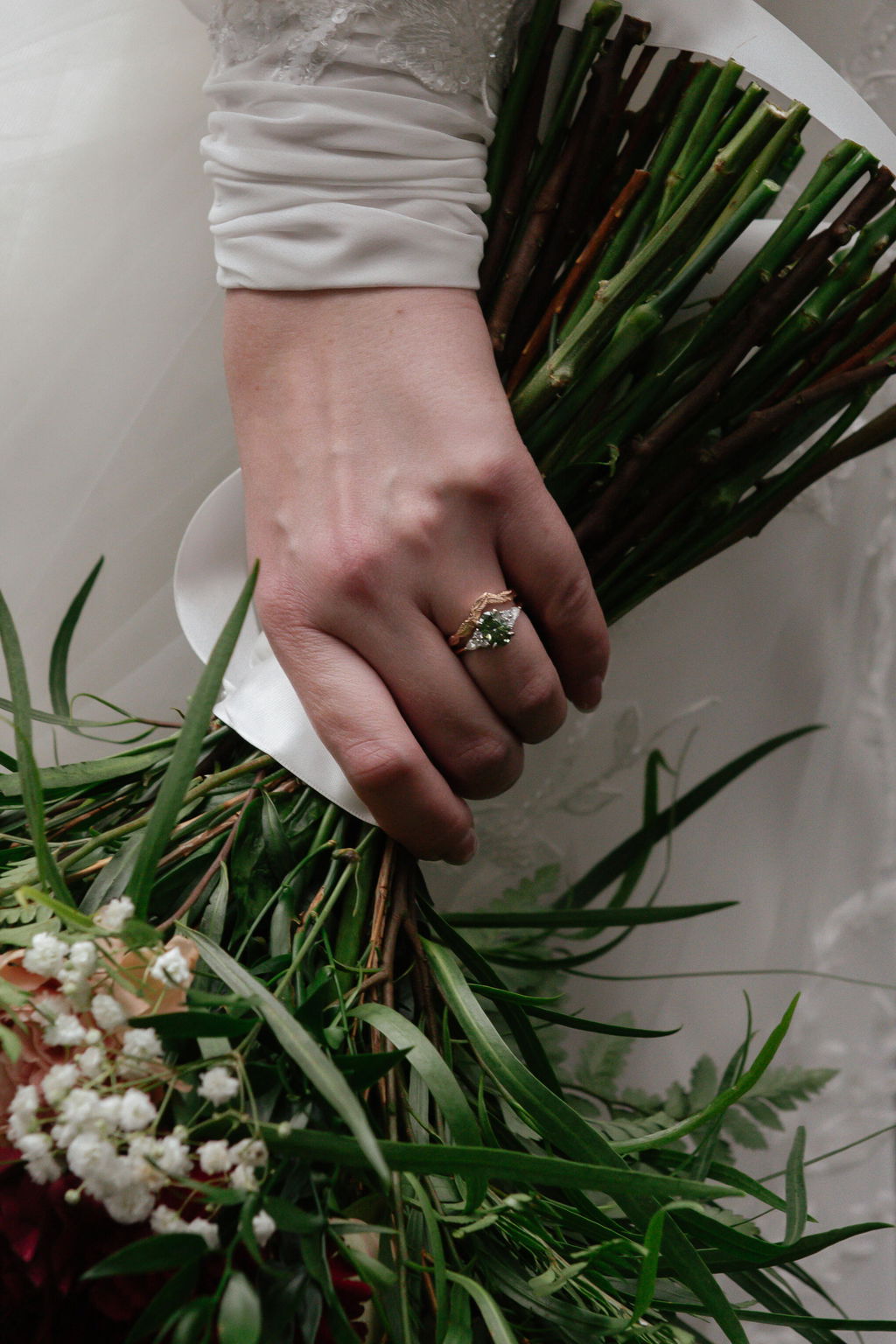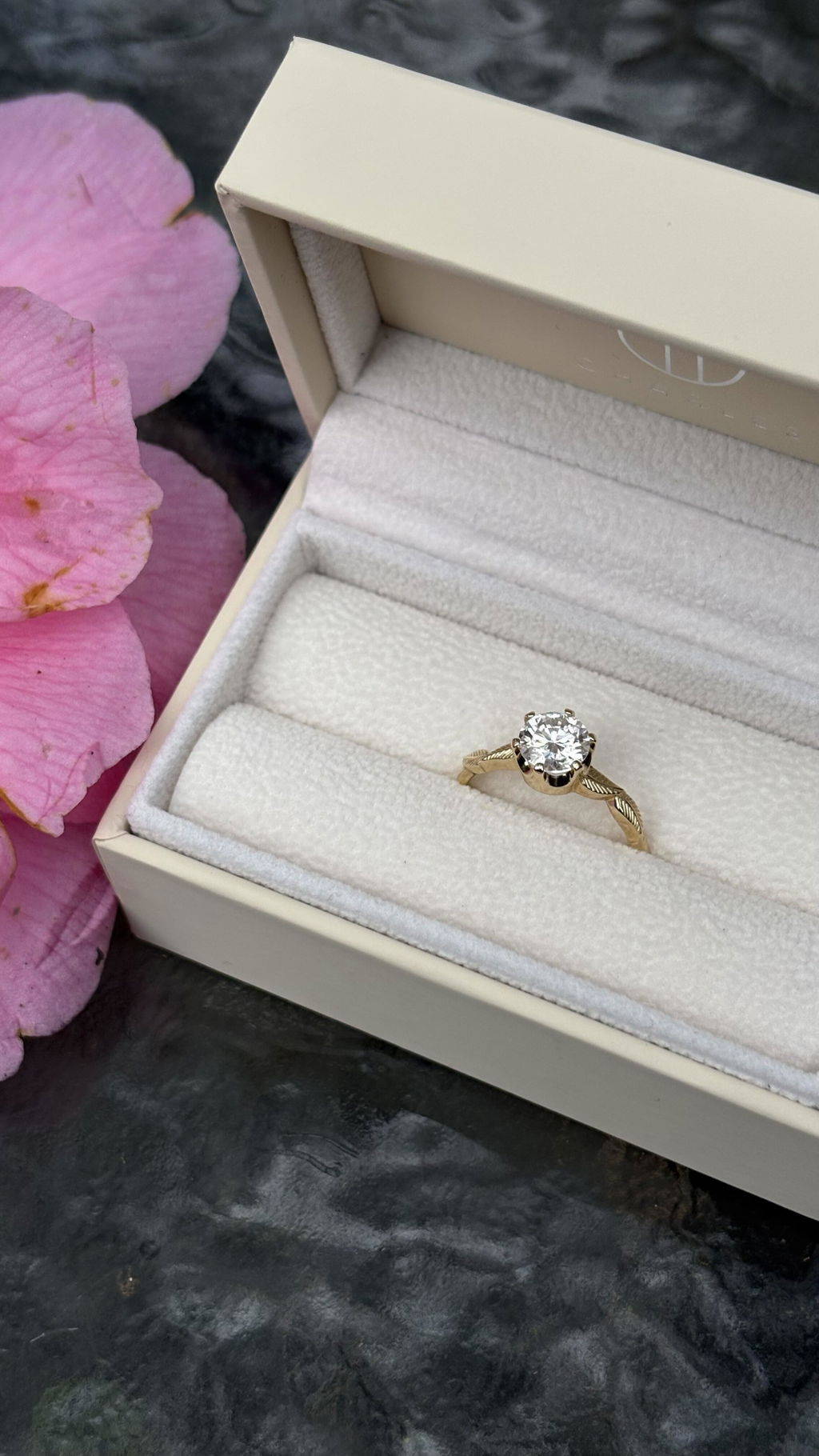


When you hold a moissanite up to the light, it almost seems to move on its own. Flashes of white light and bursts of rainbow colour flicker across its surface, creating the unmistakable “fire” that moissanite is known for.
This captivating display isn’t accidental. It’s the result of physics at work. Understanding how light behaves inside the stone explains why moissanite sparkles so intensely and why it looks so lively compared to other gems. Here’s the science behind the shine.
Refraction, Reflection and Dispersion
Every gemstone’s sparkle comes from three key optical behaviours:
- Refraction: Light bending as it enters the stone.
- Internal Reflection: Light bouncing off internal facets.
- Dispersion: White light splitting into its rainbow colours.
When light enters a gem, it slows down and bends — the strength of that bend depends on the gem’s refractive index. Once inside, light may bounce off the stone’s many facets and return to your eye as brilliance.
Moissanite, made from silicon carbide, has an unusually high refractive index of 2.65–2.69 (compared with diamond’s 2.42). Because light bends more sharply inside moissanite, the stone has more opportunities to internally reflect — returning stronger, brighter flashes.
Dispersion, or fire, is where moissanite truly stands out. With a dispersion value of 0.104, more than double that of diamond (~0.044), moissanite splits light into intense red, green and blue flashes. That’s why, even though the stone is colourless, you see such vivid rainbow sparkles.
Moissanite is also naturally doubly refractive, meaning incoming light splits into two rays that travel through the gem at slightly different angles. This adds vibrancy, movement and character to its overall sparkle.
The Words for Sparkle
Gemologists use three main terms to describe how a gemstone interacts with light:
- Brilliance: Bright white light that returns to the eye.
- Fire: Rainbow flashes created by dispersion.
- Scintillation: The twinkling effect when the stone or light moves.
Moissanite displays all three beautifully, but it’s especially loved for its dramatic fire — the colourful spark that sets it apart from diamonds and other gems.
How Lighting Conditions Change the Performance
The sparkle of moissanite rings shifts depending on the strength and direction of the light source.
- Direct sunlight or spot lighting brings out intense flashes of colour, because individual facets catch and split the light.
- Softer, diffused lighting highlights brilliance rather than rainbow fire, giving the stone a whiter, glowing appearance.
However, even the best stone can underperform if the cut is poor. If facets are misaligned, light leaks out instead of bouncing within the gem — resulting in a dull or flat look. Proper symmetry ensures moissanite performs at its brightest.
Why Cut, Shape and Facet Design Matter
Light performance doesn’t depend on the material alone. The shape and precision of the cut are equally important, and each cut interacts with light differently:
- Round brilliant cuts maximise fire and brilliance thanks to their many well-aligned facets. They are the most sparkly option.
- Ovals, pears and other elongated cuts can still deliver striking fire but require expert cutting to avoid bow-tie shadows or dark zones.
- Step cuts (like emerald) showcase broader, cleaner flashes of light, creating a refined, elegant, more understated sparkle.
Precision is everything. Even a slight deviation in symmetry or facet angle can noticeably reduce sparkle. That’s why choosing a trusted jeweller is essential when buying moissanite.
At Vinny & Charles, every moissanite stone is expertly cut to reveal maximum brilliance and fire — and our customer reviews reflect that quality. Explore our collection or get in touch to discuss a custom design.