

Key Takeaways
- The choice: sapphire vs lab-grown diamond comes down to rich colour or brilliant light.
- Durability: a lab-grown diamond rates 10 on the Mohs scale and a sapphire rates 9, so both suit daily wear.
- Ethics: lab-grown diamonds avoid mining, while Australian-mined sapphires offer a shorter, more traceable supply chain.
- Both: you do not have to choose, because one ring can hold a sapphire and lab-grown diamonds together.
Sapphire vs Lab-Grown Diamond: The Quick Answer
Choosing an engagement ring is a very personal event, and the stone chosen is hugely important. As we shift away from a desire for traditional mined diamonds, sapphires and lab-grown diamonds have emerged as alternative options. Each has its own charms, from the individuality of a sapphire engagement ring to the bold clarity of a lab-grown diamond.
In this guide we detail what is different between the two stones, to help with the first step to a ring that is perfectly 'you'. If natural diamonds are also in the mix, our sapphire vs diamond guide covers that comparison.
| Feature | Sapphire | Lab-grown diamond |
|---|---|---|
| Look | Rich colour and velvety depth | Classic brilliance and fire |
| Mohs hardness | 9 | 10 |
| Origin | Mined, including Australian fields | Grown in a lab |
| Best for | Colour and individuality | A bright, traditional look |
Aesthetics and Colour: Vibrant Hues vs Classic Pure Brilliance
The most obvious difference between the two is their visual appeal. Sapphires draw the eye with rich colours, from the classic blues of royal crowns to the earthy green tones of a modern teal sapphire. They bring elegance and charm to an engagement ring.
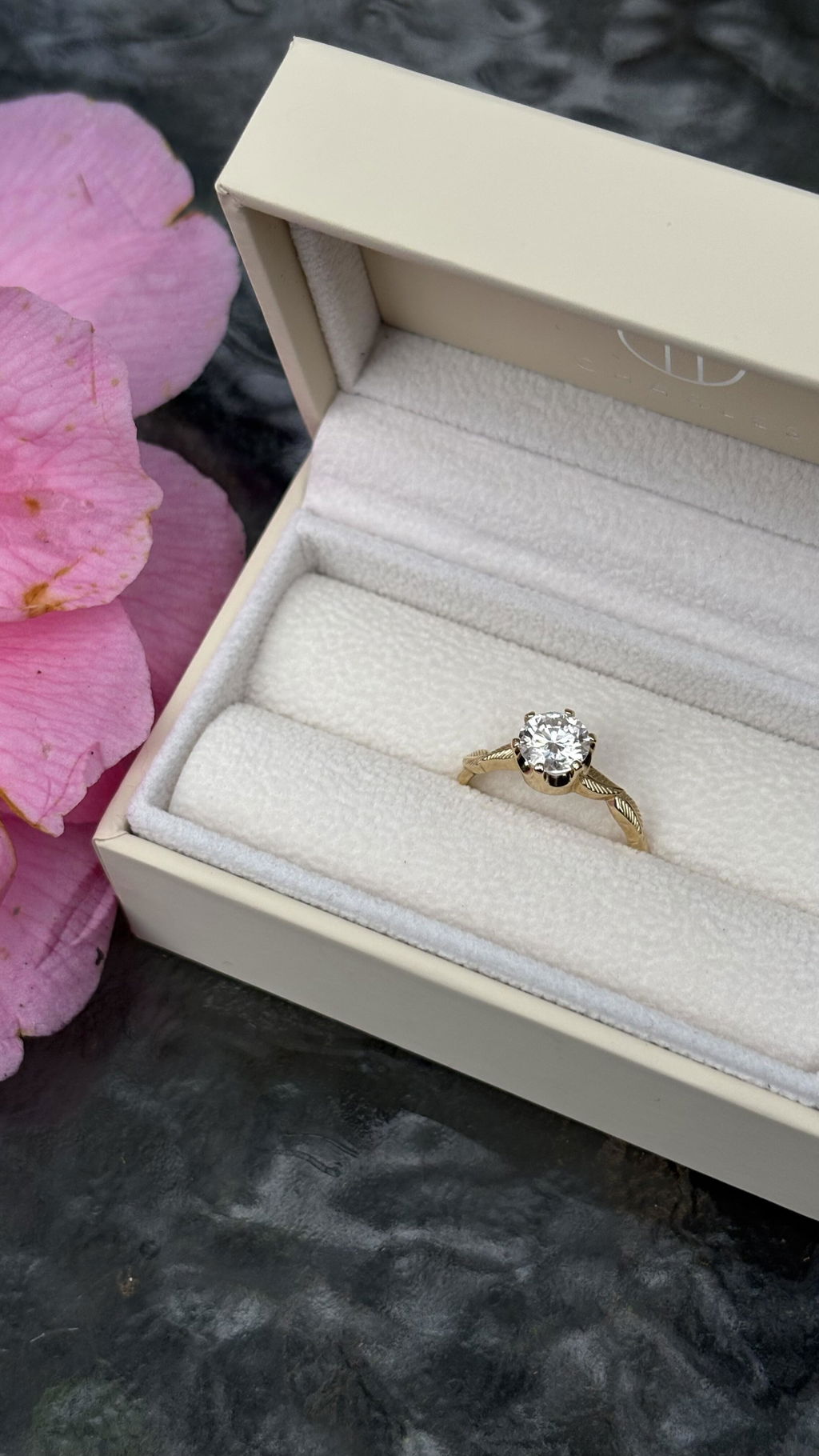
Lab-grown diamonds, on the other hand, are designed to catch light, and their appeal lies in that unmatched sparkle. The faceted surfaces catch and scatter light in a magical way, reflected within the clear stone in the full prism of colour.
- Sapphire: found in blue, pink, yellow, green and more, with rich colour rather than shimmer.
- Lab-grown diamond: clear and bright, with the classic sparkle of a diamond.
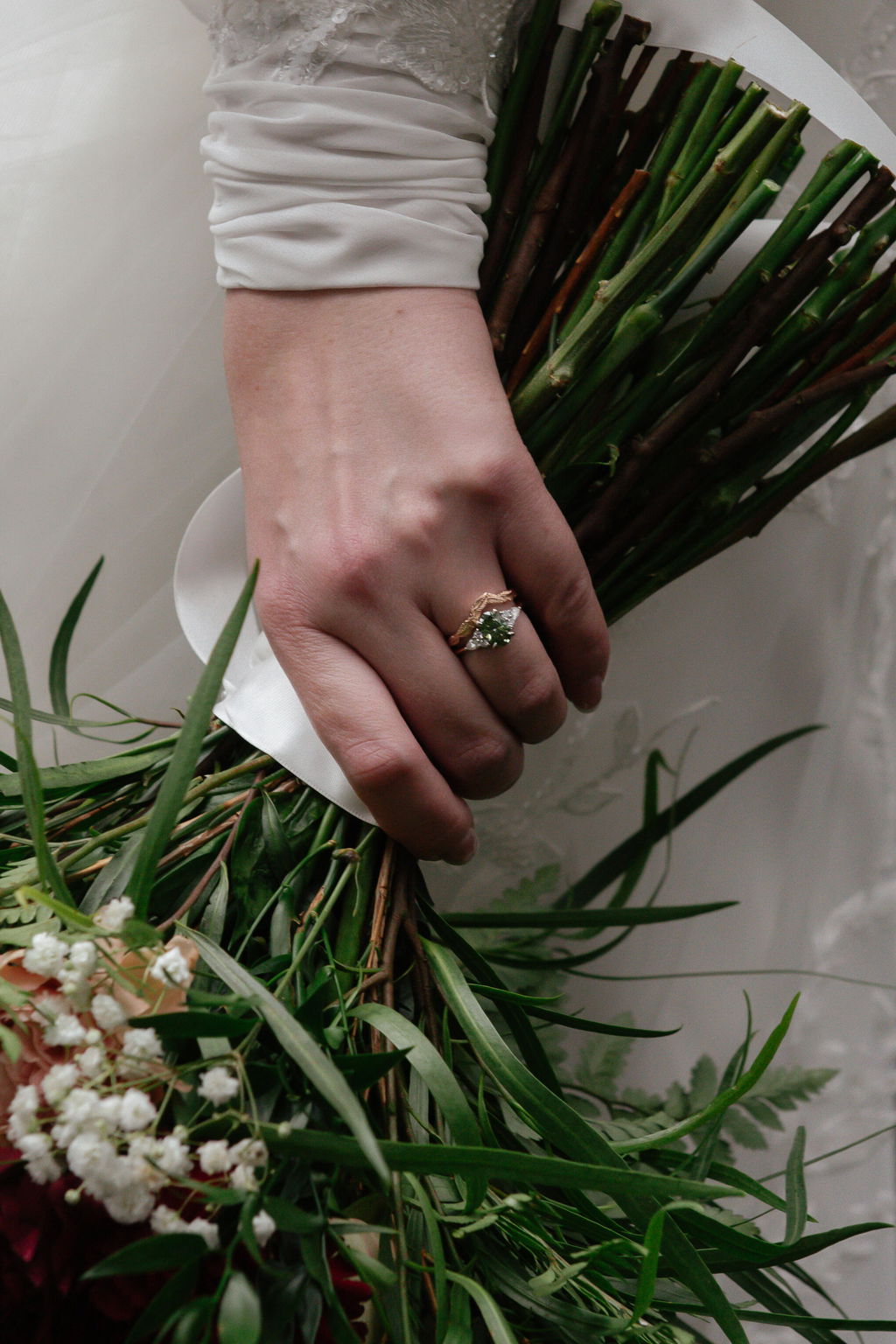
- Together: our teal sapphire leaf ring pairs a natural Australian sapphire with two lab diamonds.
Comparing Durability: Daily Wear Considerations for Active Lifestyles
There is little difference between the stones in this respect. Gemstones are ranked on a Mohs hardness scale from 1 to 10, with a higher number indicating better resistance to scratches, chips and everyday stresses.
| Gemstone | Mohs hardness | Everyday wear |
|---|---|---|
| Lab-grown diamond | 10 | Maximum scratch resistance |
| Sapphire | 9 | Highly durable, used in fine jewellery for centuries |
Both are hardy and capable of keeping up with daily life. That one point only matters if you have a very active lifestyle with lots of sports or manual work, and we advise removing any ring before swimming, gardening, gym sessions or sport.
Eco-Impact and Ethics: Lab-Grown Innovation vs Responsibly Sourced Gems
Modern couples care about the impact of a stone as much as how it looks. Lab-grown diamonds and lab-grown sapphires are generally considered more sustainable alternatives to mined stones, so the question is how each option fits a couple's values.
- Lab-grown diamond: grown in a lab, with the same physical properties as a mined diamond.
- Natural sapphire: a mined gem, so it comes with potential environmental and human impacts. Australian-mined stones from Queensland and New South Wales offer a shorter, more traceable supply chain.
- Our approach: we use recycled gold, plant five trees with every order and follow the Kimberley Process for any natural diamonds.
At Vinny & Charles we prioritise ethical sourcing, so couples can enjoy the rich opulence of a sapphire while sticking to their values.
Cost Efficiency: Maximising Carat Size Within Your Set Budget
It is important not to get carried away and stretch yourself when buying this all-important ring. We want every ring to be a meaningful token of love that does not come with large debt. Instead, set a budget and see how we can maximise the stone.
- Set your budget: decide the total you are comfortable spending before you look at stones.
- Ask for quotes on both stones: sapphire pricing varies widely with colour, clarity and origin, while diamond pricing depends on cut, colour, clarity and carat weight.
- Compare in the same design: keep the setting the same so you compare stone against stone.
- Check the paperwork: certification is normally provided on diamonds over 0.50 carats.
- Plan your payment: we take a 50% deposit with the rest on completion, and Afterpay is available to Australian customers.
Final Decision Guide: Matching Your Choice to Your Partner's Personal Style
We have gone over a number of points to help with the decision, but ultimately it comes down to the style your loved one prefers. Match their taste to the stone:
- Rich colour with classic charm: choose a sapphire.
- Sparkling light: you cannot go wrong with a lab-grown diamond.
- Cannot decide: combine them, with a sapphire set between lab diamonds.
For some inspiration, browse our lab diamond engagement ring range. To compare moissanite too, our three-way comparison of sapphire, moissanite and diamond covers all three.
Rings We Make With Each Stone
We handcraft rings with both stones in our Perth workshop, so we can show how each one looks in a real design. Our current ranges include:
- Sapphire rings: teal, green and blue sapphire designs, including trilogy rings and sapphire and diamond rings.
- Lab diamond rings: engagement rings set with lab-grown diamonds, including alexandrite and lab diamond designs.
- Made to order: each ring is made after you order, with 2 to 3 weeks for ready-made designs and 4 to 6 weeks for custom jewellery.
- Free shipping: every order ships free with express tracked delivery.
Because we make every piece ourselves, we can talk through the stone, the setting and the metal in one conversation.
Frequently Asked Questions
Is a lab-grown diamond harder than a sapphire?
Yes, slightly. A lab-grown diamond has the same physical properties as a mined diamond and rates 10 on the Mohs scale, while sapphire rates 9. Both resist scratches and chips well enough for an engagement ring worn every day, so hardness rarely decides the choice for our customers.
Which is more eco-friendly, a sapphire or a lab-grown diamond?
Lab-grown diamonds and lab-grown sapphires are generally considered more sustainable than mined stones. A natural sapphire is mined, but Australian-mined stones from Queensland and New South Wales offer a shorter, more traceable supply chain. We suggest asking any jeweller where the stone came from before buying.
Can I have a sapphire and a lab-grown diamond in one ring?
Yes. Our Teal Sapphire and Diamond Leaf Engagement Ring sets a 4mm round Australian teal sapphire between two 2mm round lab diamonds. For a different combination, we can discuss a custom design and show how the stones will sit together.
Does a lab-grown diamond come with a certificate?
Certification is normally provided on diamonds over 0.50 carats. If a customer has a particular stone in mind, we confirm what paperwork comes with it before they order. We also recommend insuring the ring, and we can provide valuation certificates for an extra fee.
Choose Your Stone With Vinny & Charles
Ready to turn the choice into a ring? Talk to us about a custom ring in sapphire or lab-grown diamond, or add a ready-made design to your cart and we will make it.
Call us on +61 8 6323 8494 to make an appointment with Melody and Chris. As Bailey Knight said, "For both price and assistance Vinny & Charles were exceptional."