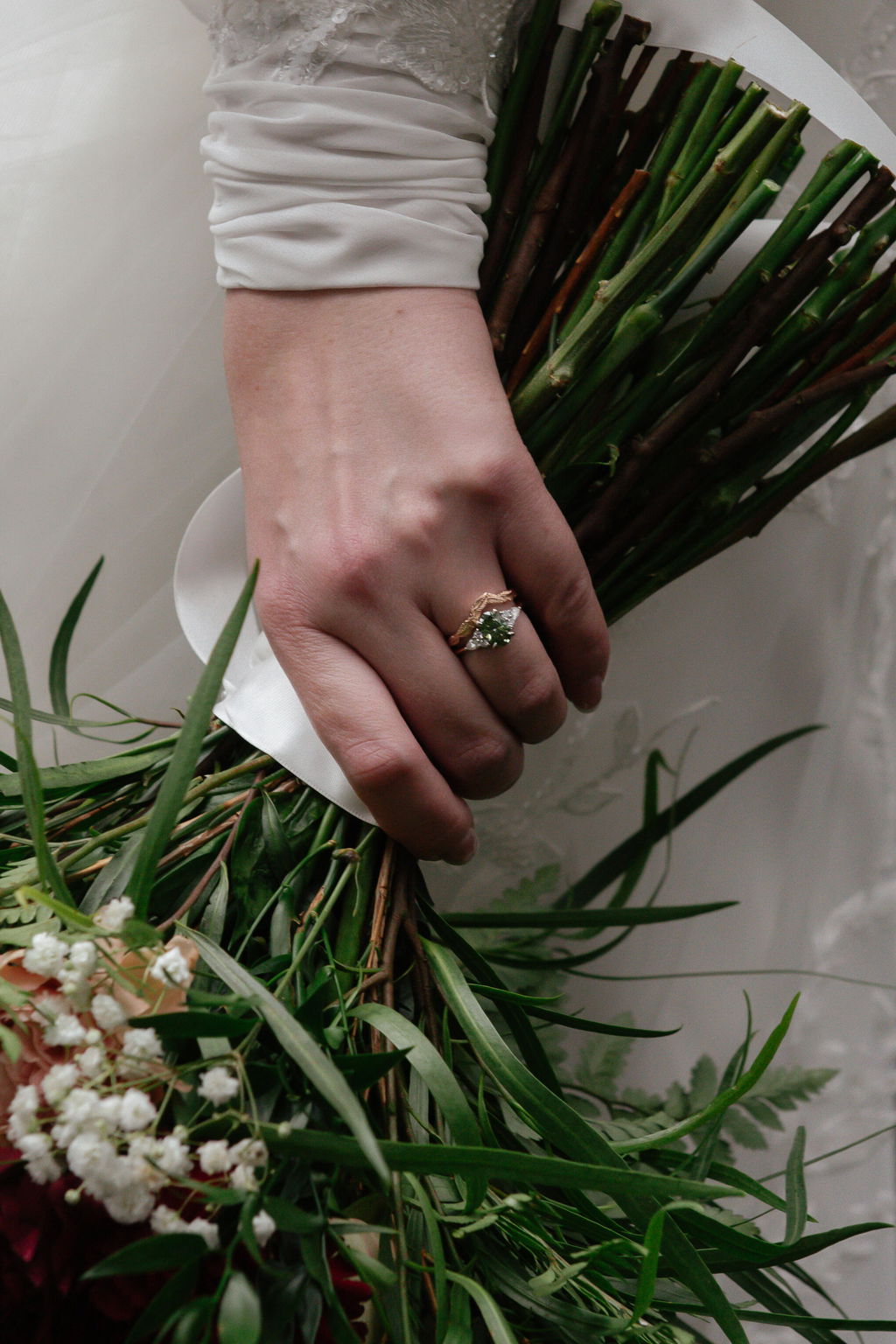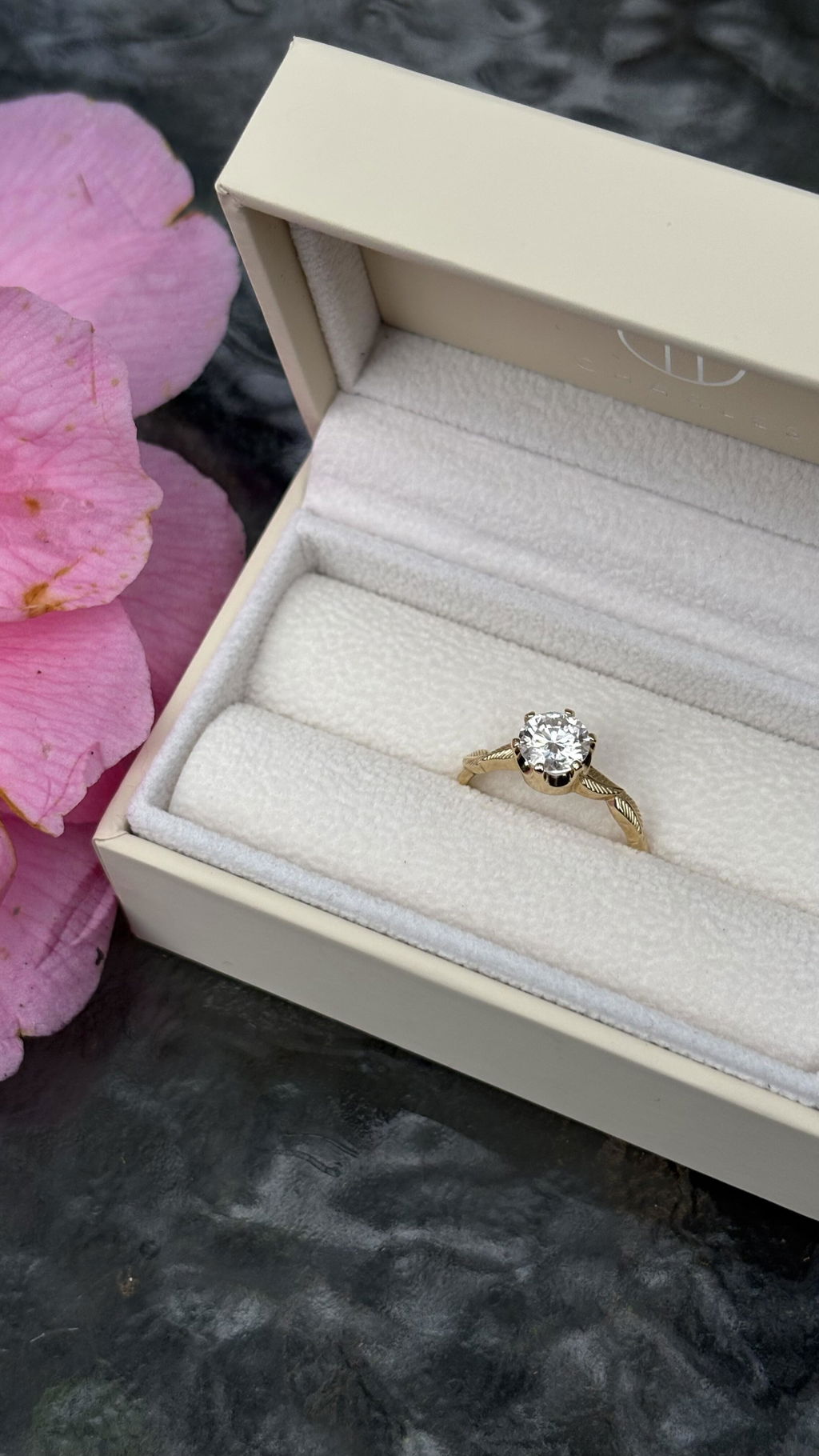


The three main commercial gold colours are yellow gold, white gold and rose gold. The typical carat options available commercially are 9, 14, 18 and 22 carat gold. The carat denotes the amount of pure gold in the piece of jewellery.
This gold carat guide explains what each number means, how 14k and 18k gold compare, and which one suits an everyday ring.
Key Takeaways
- Carat means purity: a gold carat tells you how much of the piece is pure gold, out of 24 parts.
- Higher is purer: 18k is 75% gold and 14k is 58.3% gold.
- The rest is alloy: other metals add hardness and change the colour.
- Colour comes from the mix: yellow, white and rose gold use different added metals.
- Every maker has a recipe: the gold percentage is standard, but the alloy is not.
What Is a Carat of Gold?
A carat of gold is one twenty-fourth part of the piece. So 24k is pure gold, and a lower number means more of other metals are mixed in. Here are the common carats and what they contain.
For example:
- 22k is 91.6% gold
- 18k is 75% gold
- 14k is 58.3% gold
- 9k is 37.5% gold
In its natural state, gold is 24k gold, which is 'pure' gold. The balance are different metals that, through their properties provide certain characteristics. As a foodie, I like to use a food analogy.
Why Gold Mixes Differ Between Makers
There are hundreds if not thousands of different recipes for cakes. Each cake has a taste, texture and a host of other characteristics. And most importantly some taste amazing and others are down right terrible.
The same applies to gold mixes/alloys. Each manufacturer has their own "recipe" for the properties they would like their gold to have, for example hardness. Typical metals that are used as alloys include:
- Copper: adds warmth and strength, and gives rose gold its colour.
- Silver: softens the tone and lightens the colour.
- Zinc: used in some mixes to help the metal cast cleanly.
- Platinum and palladium: used in white gold mixes.
- Nickel: used in mass production, depending on the market within which it has been sold.
Because it is easy to change the colour of gold, different quantities of the added metals determine the colour of the gold.
Yellow, White and Rose Gold Compared
Yellow, white and rose gold can all be made in any of the common carats. The colour comes from the mix of added metals, not from the carat.
| Colour | What gives the colour | Look |
|---|---|---|
| Yellow gold | Gold with copper and silver | Classic warm yellow |
| White gold | Gold with white metals such as palladium | Cool silver tone |
| Rose gold | Gold with a higher share of copper | Soft pink glow |
Looking for a gold karat color chart? The tables on this page cover both colour and carat. If you are weighing up rose gold, see our guide to what you need to know about rose gold.
14k vs 18k Gold: What Is the Difference?
18k gold has more pure gold than 14k, so it has a richer colour. 14k has more added metals, so it is generally the harder wearing of the two.
| Carat | Pure gold | What to expect |
|---|---|---|
| 22k | 91.6% | Deep colour, softest, best for special pieces |
| 18k | 75% | Rich colour, a popular choice for fine rings |
| 14k | 58.3% | Lighter colour, harder wearing for daily use |
| 9k | 37.5% | Paler colour, the most hard wearing and lowest gold content |
The right choice depends on how often the ring is worn and how much gold content matters to you. Both 14k and 18k work well for engagement and wedding rings.
How to Choose the Right Gold Carat
Start with how you will wear the piece, then match it to the carat.
- Daily wear: consider 14k, as the added metals help the ring resist knocks.
- Richer colour: consider 18k, which has more pure gold.
- Skin that reacts to jewellery: ask us about the mix first, as different alloys react differently.
- Care: follow our jewellery care guide to keep the gold looking its best.
If your skin marks, read why some jewellery leaves a mark on your skin.
Gold Carat for Engagement and Wedding Rings
Engagement and wedding rings are worn every day, so the carat is a balance between colour, gold content and durability. Our team can compare 9k, 14k and 18k options in the colour you like.
- 9k: 37.5% gold, the lowest gold content of the common carats.
- 14k: 58.3% gold, with more added metals for everyday wear.
- 18k: 75% gold, with a richer colour from the extra pure gold.
- 22k: 91.6% gold, the highest of the common carats.
Because each maker has their own alloy recipe, two 18k rings from different jewellers can look and wear slightly differently. Ask any jeweller what metals are mixed with the gold in your ring.
Questions to Ask Before You Buy a Gold Ring
- What carat is it? The carat tells you the share of pure gold.
- What colour is it? Yellow, white and rose gold are the three main commercial colours.
- What is the alloy? The added metals affect hardness and how the gold wears.
- How will I wear it? Daily wear and occasional wear can suit different carats.
- How do I look after it? Ask for care advice so the gold stays in good shape.
Frequently Asked Questions
What is a carat of gold?
A carat of gold is one twenty-fourth part of the piece by weight. Pure gold is 24 carat. An 18 carat ring is 18 parts gold and 6 parts other metals, which makes it 75% gold. The number tells you the gold content, not the colour.
Is 18k gold better than 14k gold?
Neither is better in every way. 18k has more pure gold and a richer colour, while 14k is generally harder wearing because it has more added metals. Many couples choose 14k for daily wear and 18k for a deeper colour. Both suit engagement and wedding rings.
Does the carat change the colour of gold?
The added metals set the colour, but the carat changes how strong it looks. Higher carat yellow gold looks richer because it has more pure gold, while lower carat gold can look paler. White and rose gold get their tone from the metals mixed in.
What percentage of gold is in 9k, 14k and 18k?
9k gold is 37.5% gold, 14k is 58.3% gold and 18k is 75% gold. 22k is 91.6% gold. The balance in each piece is made up of other metals chosen for hardness and colour. A higher number always means more pure gold in the piece.
Which gold carats are most common?
The typical carat options available commercially are 9, 14, 18 and 22 carat gold. For engagement and wedding rings, 14k and 18k are the two most often compared. Pure 24k gold is the natural state of gold, and every other carat is mixed with other metals.
Choose Your Gold and Talk to Us
Ready to choose a gold carat for your ring? Browse our engagement rings and gold wedding rings, or call us on +61 8 6323 8494 and we will talk you through 9k, 14k and 18k options. Every ring is handcrafted in Perth and comes with a lifetime warranty.