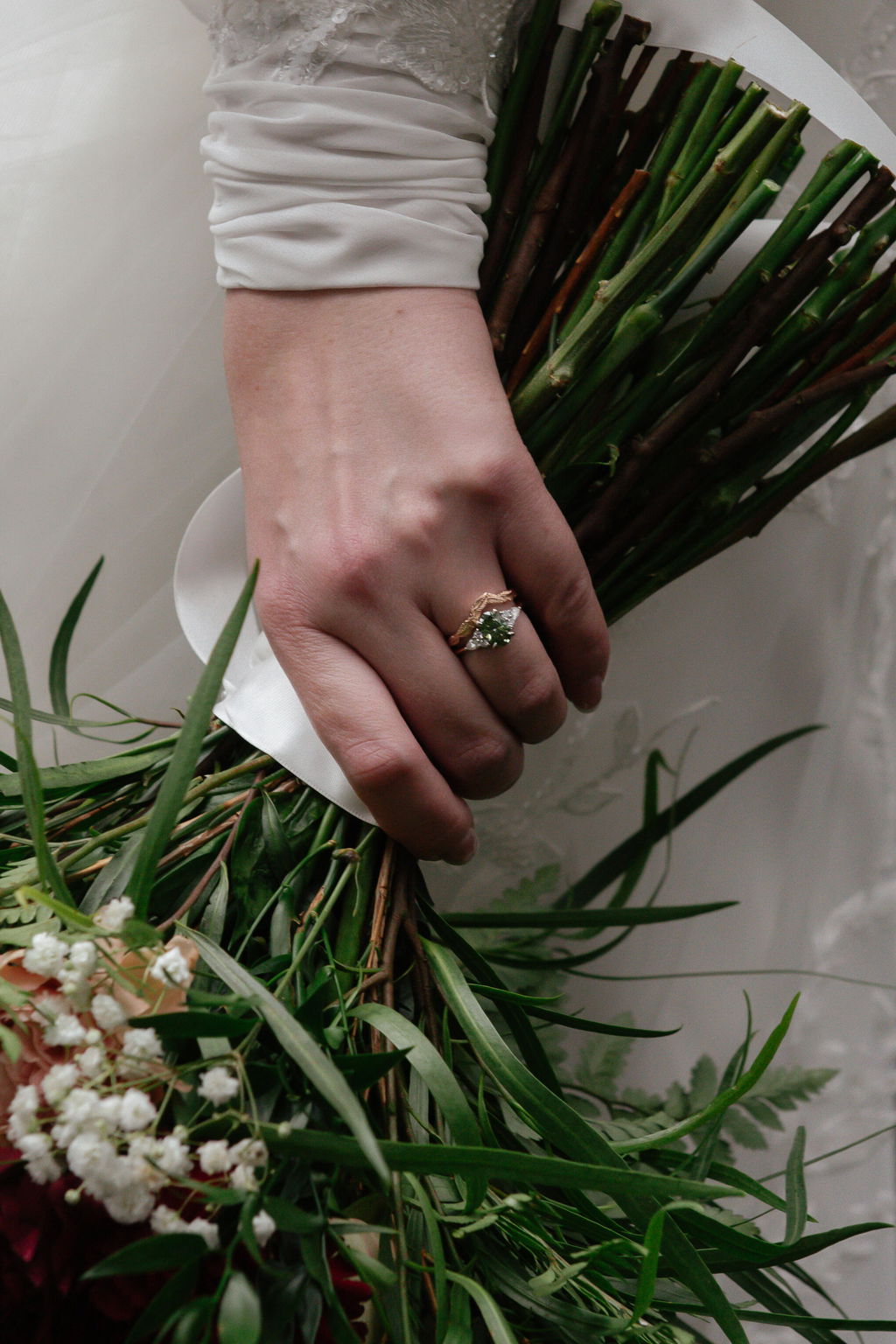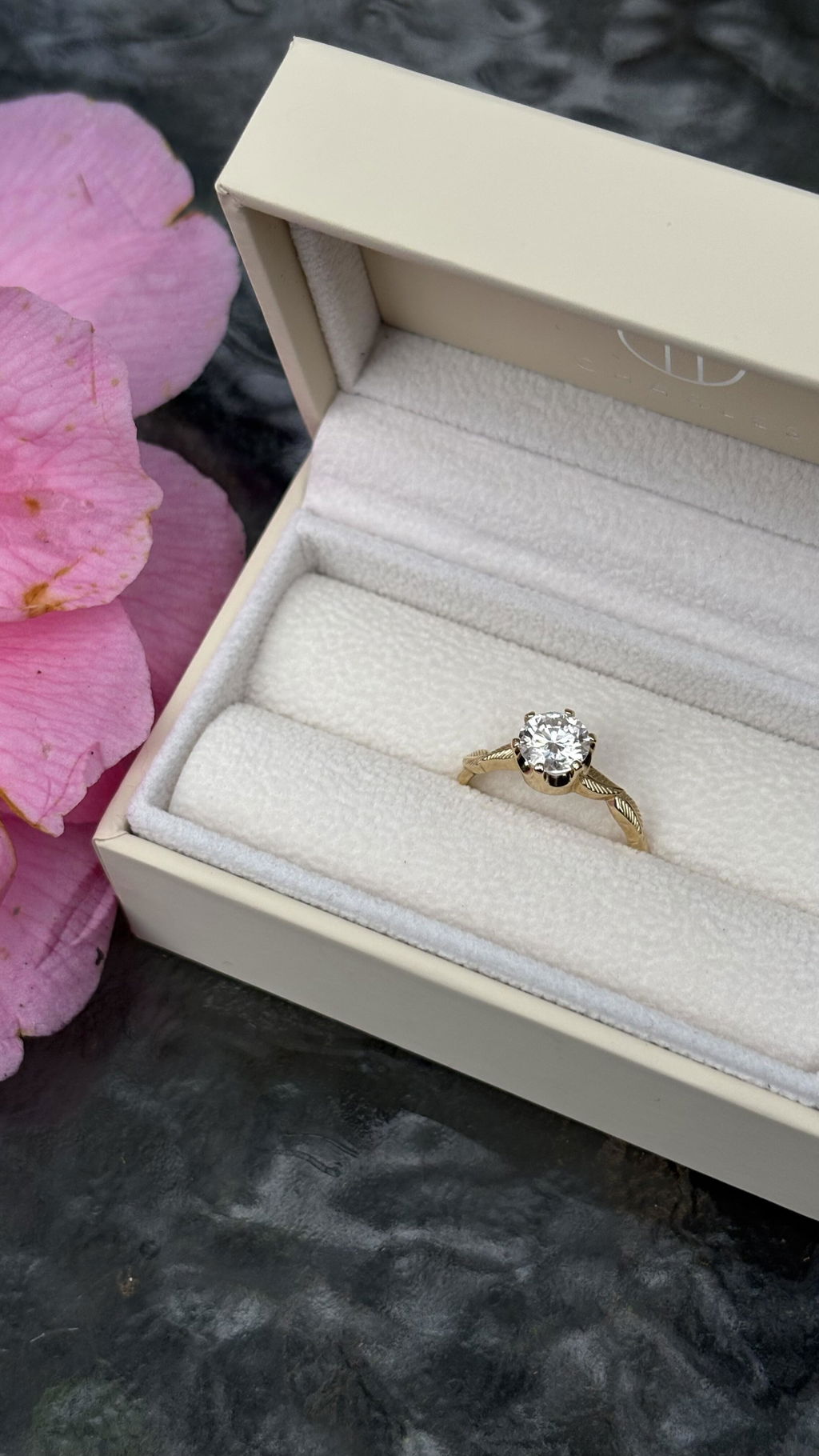


Lab grown alexandrite is a good idea because it gives you the colour change, the hardness and the beauty of this rare gemstone without the cost or the mining. If you are choosing a centre stone for an engagement ring, here are four reasons we love it.
Alexandrite is known for changing colour in different light, and a lab created stone shows that same effect. It is a stone that surprises you every time the light changes.
Key Takeaways
- Beautiful: alexandrite changes colour depending on the lighting conditions.
- Hard wearing: it is an 8.5 on the Mohs hardness scale, so it suits daily wear.
- Sustainable: most alexandrite today is lab created, with none of the destruction that comes with gemstone mining.
- Cost effective: a lab created stone is far more wallet-friendly than a rare natural one.
- Handcrafted: every ring is handcrafted in Perth, and we can create a custom design.
1. Beauty
No one can dispute that Alexandrite is a beautiful gemstone, with its colour-changing properties it shifts from bluish green to purplish red depending on the lighting conditions.
According to the Gemological Institute of America (GIA), alexandrite looks bluish green in daylight and purplish red in incandescent light. Here is what that looks like.
| Light | Colour you see |
|---|---|
| Daylight | Bluish green |
| Incandescent light | Purplish red |
| Fine stones in daylight | Green to bluish green |
| Fine stones in incandescent light | Red to purplish red |
2. Hardness
Alexandrite is an 8.5 on the Mohs hardness scale (diamond is 10), making it an excellent choice for an engagement ring centre stone that will be worn daily.
- Diamond: 10 on the Mohs scale.
- Alexandrite: 8.5 on the Mohs scale.
- Daily wear: hard enough for a ring you wear every day.

3. Sustainable
Alexandrite in its 'natural' form is incredibly rare and therefore also expensive. Most Alexandrite today is lab created, meaning that it has essentially the same chemical, physical and optical properties as naturally occurring Alexandrite, but with none of the nasty destruction that comes with gemstone mining.
| Point | Natural alexandrite | Lab created alexandrite |
|---|---|---|
| Rarity | Very rare, fine stones are exceptionally rare | Grown in a lab, so it is widely available |
| Source | Mined, for example in Sri Lanka, East Africa and Brazil | Made in a lab with no mining |
| Colour change | Yes | Yes |
| Cost | Expensive | Much more wallet-friendly |
If sustainability matters to you, read our guide to recycled gold. We use recycled gold in our rings.
4. Cost Effective
Lab created Alexandrite is a much more cost effective and wallet-friendly gemstone alternative making it perfect for modern couples who are more interested in spending their wedding budget in other ways (hello travel - hello new home)
- The ring: a stunning centre stone that fits your budget.
- The trip: more to spend on the honeymoon.
- The home: more to put towards your new place.
How to Choose a Lab Grown Alexandrite Ring
Choosing the ring is the fun part. These steps make it easier.
- Look at it in different light: view the stone in daylight and indoors to see the colour change.
- Pick the setting: choose a style that suits your hand and your lifestyle.
- Pick the metal: ask us about yellow, white or rose gold made from recycled gold.
- Think about daily wear: an 8.5 on the Mohs scale is a strong choice for a ring you wear every day.
- Care for it: clean it gently and store it safely once it is yours.
Lab Grown Alexandrite vs Lab Grown Diamond
Many couples weigh up alexandrite against a lab grown diamond. Both are lab created and both are hard wearing, but they look very different on the hand.
| Point | Lab grown alexandrite | Lab grown diamond |
|---|---|---|
| Mohs hardness | 8.5 | 10 |
| Look | Changes colour with the light | Colourless and bright |
| Made | In a lab, with no mining | In a lab, with no mining |
| Best for | A unique, colourful centre stone | A classic look |
If you love the classic look, see our lab diamond engagement rings as well.
Caring for Your Alexandrite Ring
A hard stone still deserves a little care. Alexandrite is an 8.5 on the Mohs scale, so it handles daily wear well, but a few habits keep it looking its best.
- Clean gently: follow our jewellery care guide.
- Store it apart: keep it separate from other jewellery so nothing rubs against it.
- Check the setting: look over the claws now and then to make sure the stone is secure.
- Ask us: if you are unsure about anything, call or email and we will help.
Is Lab Grown Alexandrite Right for You?
Lab grown alexandrite suits couples who want something rare looking without a rare price tag. It is a stone with a story, because it changes with every room you walk into.
- You want something different: a colour changing stone is far from the usual choice.
- You care about the planet: there is no mining behind a lab created stone.
- You wear your ring daily: an 8.5 on the Mohs scale suits everyday life.
- You want to spend wisely: more of your budget goes to the things you love.
Questions to Ask Before You Buy an Alexandrite Ring
A few simple questions help you choose with confidence, whoever you buy from.
- Is the stone lab created or natural? This changes the price a lot.
- Does it change colour? View it in daylight and in warm indoor light.
- What is the metal? Ask if the gold is recycled.
- Who makes the ring? Ask if it is handcrafted and where.
- Is there a warranty? Ask what is covered and for how long.
Frequently Asked Questions
Is lab grown alexandrite real alexandrite?
Yes. Lab grown alexandrite is grown in a lab rather than mined, and it has essentially the same chemical, physical and optical properties as natural alexandrite. It shows the same colour change, which is why many couples choose it for an engagement ring.
Is lab created alexandrite worth it?
For many couples, yes. Natural alexandrite is incredibly rare and expensive, while lab created alexandrite is much more cost effective. You get the colour change and the hardness at a price that leaves more of your wedding budget for travel or a new home.
How hard is alexandrite?
Alexandrite is an 8.5 on the Mohs hardness scale, and diamond is 10. That makes it hard enough to be worn every day, so it is an excellent choice for an engagement ring centre stone that you want to last.
What colour is alexandrite?
Alexandrite changes colour with the light. According to the GIA, it looks bluish green in daylight and purplish red in incandescent light. That colour change is what makes alexandrite such a special centre stone and a popular choice for unusual engagement rings.
Can I have a custom alexandrite ring made?
Yes. If you do not see a design you like, we can talk you through a custom design option. Every ring is handcrafted in Perth, so we can adjust the setting and the metal. See our page on custom engagement and wedding rings.
Find Your Alexandrite Engagement Ring
If you are looking for an Alexandrite Engagement Ring then you've come to the right place. Browse our Alexandrite rings and buy online, or call us on +61 8 6323 8494.
Don't see a design that you like? Reach out to us at info@vinnyandcharles.com or the messenger below to explore a custom design option. Every ring comes with free express shipping and a lifetime warranty.